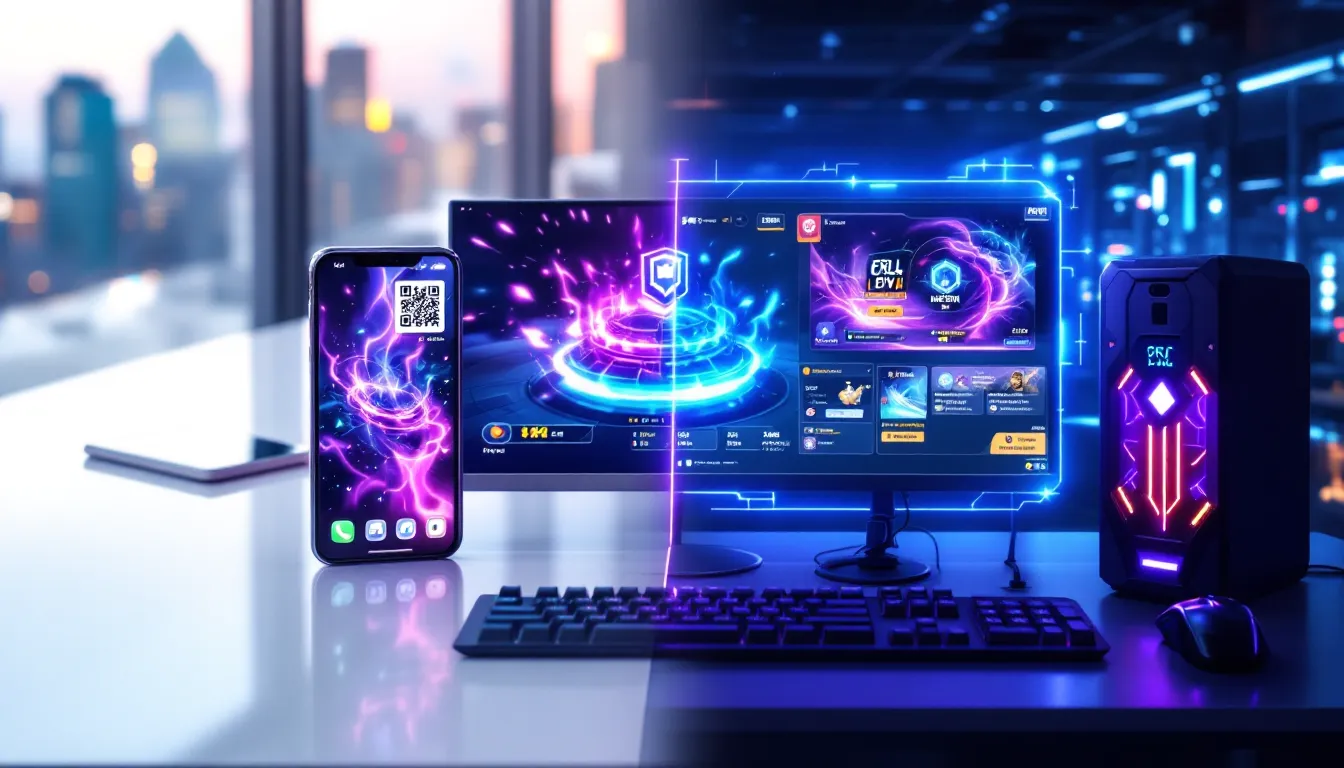
If you’ve spent time in the global Clash Royale community, you might’ve heard whispers about a parallel universe, the Chinese version. It’s the same tower-rush gameplay you know, but running on separate servers with its own rules, publisher, and even exclusive content. For most international players, it’s a curiosity. For competitive enthusiasts and data miners, it’s a fascinating case study in how a single game can fork into two distinct ecosystems.
Chinese Clash Royale isn’t just a localized translation. It operates under different regulatory frameworks, features modified visuals to comply with censorship laws, and occasionally rolls out cards or events that never reach the global build. Understanding these differences matters if you’re tracking the competitive meta, considering cross-region play, or simply curious why top Chinese players dominate certain archetypes. This guide breaks down everything from regulatory requirements to exclusive content, competitive scenes, and whether trying the Chinese version is worth your time.
Table of Contents
ToggleKey Takeaways
- Chinese Clash Royale operates as a legally separate version published by Tencent, featuring censored visuals, anti-addiction systems, and region-locked servers to comply with strict Chinese gaming regulations.
- Visual and gameplay differences include redesigned skeletons, modified color palettes, and occasional exclusive features like a 2v2 ranked ladder mode, though core card mechanics remain aligned with the global version.
- China’s competitive Clash Royale esports scene rivals the global circuit with dedicated CRL China tournaments, significant prize pools exceeding ¥2 million annually, and influential pro players who drive global meta trends.
- International players face substantial barriers to accessing Chinese Clash Royale including high latency (200-350ms), mandatory real-name verification via Chinese ID, and inability to transfer progress from global accounts.
- Monetization in the Chinese version is cheaper than global pricing but strictly regulated for minors, with age-based spending caps (¥50-¥400 monthly) and mandatory playtime restrictions enforced by law.
- Unless focused on competitive research or cultural exploration, international players benefit more from the global version due to account continuity, lower latency, and equivalent core gameplay experience.
What Is Chinese Clash Royale and How Is It Different?
Chinese Clash Royale is a region-locked version of Supercell’s mobile strategy game, published and operated specifically for mainland China. While the core gameplay loop, deploy troops, destroy towers, manage elixir, remains identical, the Chinese build exists as a legally and technologically separate entity from the global version.
Players download it from Chinese app stores (iOS App Store China, Tencent’s MyApp, or Huawei AppGallery), and it connects to servers hosted within mainland China. The build number often lags or leads the global version by a patch cycle or two, depending on approval timelines from Chinese regulatory bodies.
Key Differences Between Global and Chinese Versions
The most obvious splits are visual and regulatory. Skulls, bones, and blood effects are heavily modified or removed to comply with Chinese content standards. Cards like Skeleton Army and Giant Skeleton feature redesigned art, skeletons become robotic or cloaked figures, and tombstones turn into treasure chests or neutral objects.
Balance changes usually mirror the global version, but deployment timing can differ. If Supercell pushes a nerf to Hog Rider globally in mid-February, the Chinese build might receive it a week later after local publisher approval. This creates brief windows where the meta diverges, which competitive players exploit during international scrims.
Language and voiceovers are fully localized to Simplified Chinese, with unique sound effects and announcer lines. Emotes sometimes feature different animations or cultural references, Lunar New Year emotes in China may debut weeks before global rollouts or never appear outside the region.
Publisher and Developer Changes in China
Supercell develops the game, but Tencent Games publishes and operates Chinese Clash Royale. This partnership, formalized in 2016 shortly after the global launch, is standard practice for foreign gaming companies entering China. Tencent handles server infrastructure, payment processing, customer support, and compliance with local regulations.
Tencent’s involvement means the Chinese version integrates with QQ and WeChat ecosystems, allowing players to link accounts, share replays, and even purchase gems through WeChat Pay. The client UI includes social features unique to Tencent’s platform, like clan chat integration with QQ groups and in-app live streaming tools.
Why Does China Have a Separate Clash Royale Version?
China’s gaming market operates under strict government oversight, making a localized, region-locked version the only viable path for foreign developers. The split isn’t a business preference, it’s a legal necessity.
Chinese Gaming Regulations and Compliance Requirements
All games distributed in China must secure an ISBN (publication license) from the National Press and Publication Administration (NPPA). The approval process involves content review, age-rating assignment, and ongoing compliance checks. Games featuring “inappropriate” content, defined broadly to include excessive violence, gambling mechanics, or politically sensitive themes, face rejection or mandatory edits.
Clash Royale’s original art featured skulls, gravestones, and undead troops, all flagged under Chinese content standards. To secure approval, Supercell and Tencent redesigned affected assets. The Chinese build also implements anti-addiction systems mandated by law: players under 18 face playtime caps (90 minutes on weekdays, three hours on weekends and holidays as of 2021 regulations), and real-name verification via government ID is required for all accounts.
Monetization models undergo scrutiny too. Loot boxes and gacha mechanics must disclose drop rates, and spending limits apply to minors, players under 18 can’t spend more than ¥400 (~$56 USD) per month on in-app purchases.
Data Localization and Server Infrastructure
Chinese data sovereignty laws require user data generated within China to be stored on servers physically located in mainland China. This means Chinese Clash Royale players connect to Tencent-operated servers in Beijing, Shanghai, and Guangzhou, completely separate from Supercell’s global infrastructure.
Latency between regions makes cross-play impractical, but the legal barrier is absolute: Chinese accounts can’t access global servers, and global accounts can’t connect to Chinese servers without VPN workarounds (which violate terms of service). This split also affects essential strategies since server-side balance tweaks sometimes deploy at different times.
Unique Features and Content in Chinese Clash Royale
Beyond regulatory edits, the Chinese version occasionally debuts exclusive content or runs parallel event calendars that diverge from the global roadmap.
Exclusive Cards and Game Mechanics
As of early 2026, there are no permanently exclusive cards in the Chinese version, Supercell maintains card parity to avoid fragmenting the competitive meta. But, beta tests for new cards sometimes run in China first. In late 2024, a reworked Electro Giant mechanic was soft-launched in the Chinese build for two weeks before global rollout, giving Chinese players early practice time.
Certain game modes have appeared in China ahead of global release. A co-op 2v2 ladder mode with ranked progression debuted in the Chinese client in January 2026 and remains region-exclusive pending further testing. Tencent occasionally experiments with features tailored to Chinese player behavior, like clan-based territorial conquest events that haven’t translated to the global build.
Modified Visual Elements and Censorship
The visual overhaul goes deeper than skeleton redesigns. Graveyard spawns glowing spirits instead of skeletal remains. Poison uses purple mist rather than the green toxic visual from the global version. Executioner’s axe is resized and less graphic in swing animations.
Card descriptions and flavor text are localized, but also sanitized. References to death, violence, or destruction get reframed as “defeat,” “challenge,” or “competition.” The King’s laugh emote has altered facial expressions to appear less mocking, aligning with anti-toxicity guidelines enforced more strictly in Chinese gaming communities.
Interestingly, some Chinese players prefer the censored visuals. The softer color palette and reduced particle effects improve performance on mid-range Android devices common in the Chinese market. Sites like Game8 have documented frame-rate comparisons showing the Chinese build runs 5-10% smoother on devices with less than 4GB RAM.
In-Game Events and Seasonal Content Variations
Seasonal events align loosely with the global calendar but emphasize Chinese holidays. Lunar New Year events in China are month-long affairs with exclusive tower skins, emotes, and limited-time challenges. The 2026 Year of the Snake event featured a snake-themed arena and special card backs unavailable globally.
Global events like Halloween or Christmas are downplayed or rebranded. Halloween 2025 became “Autumn Festival” in China, with pumpkin decorations replaced by harvest-themed imagery. The gameplay, special challenges, boosted rewards, remained identical, but the thematic wrapper changed.
Chest rewards during Chinese events sometimes skew toward different rarities. While players applying beginner strategies benefit globally from event chests, Chinese events occasionally offer higher legendary drop rates during major holidays, though Supercell hasn’t officially confirmed whether this is coincidence or intentional regional tuning.
How to Download and Play Chinese Clash Royale
Accessing the Chinese version from outside mainland China requires navigating app store restrictions and account verification systems designed to block foreign users.
Registration Requirements and Account Setup
The Chinese build isn’t available on global app stores. iOS users need an Apple ID registered to the China region, which requires a Chinese phone number for verification. Creating a China-region Apple ID from outside China is technically possible using third-party phone number services, but Apple actively blocks many of these workarounds.
Android users face similar barriers. Tencent’s MyApp store and the Huawei AppGallery require Chinese phone verification. Some players use APK mirrors to sideload the Chinese client, but without a verified account, progression is limited, real-name verification via Chinese national ID becomes mandatory after reaching Arena 4 (around 1200 trophies).
Once installed, account creation pulls from QQ or WeChat, both requiring Chinese phone numbers. Guest accounts exist but hit the real-name verification wall quickly, locking players out of ranked modes, in-app purchases, and clan features.
VPN and Regional Access Considerations
Even with the app installed, connecting to Chinese servers from outside China introduces latency. Ping from North America or Europe averages 200-350ms, making precise timing for spell placements or troop drops nearly impossible. Competitive play becomes a coin flip.
Some players use VPNs with Chinese exit nodes to reduce latency, but this is a gray area. Tencent’s terms of service prohibit VPN use to bypass regional restrictions, and accounts flagged for suspicious login locations risk temporary or permanent bans. The anti-cheat system detects rapid geographic shifts, logging in from New York one hour and Shanghai the next triggers automatic review.
For international players curious about exclusive content, screen recordings and Chinese-language streams on Bilibili (China’s YouTube equivalent) offer a safer alternative to hands-on play. Pocket Tactics occasionally covers Chinese-exclusive events through partner content, saving players the hassle of account setup.
The Chinese Clash Royale Competitive Scene
China’s Clash Royale esports ecosystem rivals, and in some metrics, surpasses, the global competitive landscape. Tencent invests heavily in tournament infrastructure, player development, and broadcast production.
Major Tournaments and Esports Events
The Clash Royale League (CRL) China operates as a standalone league separate from the global CRL circuit. Seasons run quarterly with a mix of online qualifiers and LAN finals. Prize pools for CRL China 2025 exceeded ¥2 million (~$280,000 USD) across the year, comparable to the global CRL.
Tencent also runs the King Cup, a monthly open tournament with no entry restrictions. Thousands of players compete in bracket-style elimination rounds, with top finishers earning direct invites to CRL qualifiers. The King Cup’s accessibility has cultivated a deep amateur scene, regional champions from tier-2 cities regularly upset established pros.
Cross-region tournaments are rare but notable. The Clash Royale World Finals occasionally features a “China vs. World” exhibition match, though account restrictions mean Chinese players must use temporary global accounts with pre-configured card levels. The 2025 World Finals saw Chinese team LGD Gaming take second place, losing to a European squad in a nail-biting 3-2 tiebreaker.
Top Chinese Players and Teams to Watch
Several Chinese players have achieved near-legendary status within the community. “Lciop” (also known as Surgical Goblin’s Chinese counterpart) has held the #1 global ladder spot on the Chinese servers for six consecutive seasons as of March 2026. His deck innovation, particularly his reworked Golem Beatdown with Electro Spirit, has influenced global meta trends documented by Twinfinite.
Team LGD and Nova Esports dominate the CRL China circuit. LGD’s roster includes “Aaron,” a former Hearthstone pro who transitioned to Clash Royale in 2024 and immediately placed top 8 in his first CRL season. Nova’s “Pompeyo” (no relation to the global player Pompeyo) is known for aggressive Hog cycle play and frame-perfect spell timings.
Streaming culture thrives on Douyu and Bilibili, where top players pull 50,000+ concurrent viewers during peak hours. Unlike Twitch or YouTube, Chinese streams heavily integrate viewer participation, live polls decide which decks pros test, and top donators get 1v1 coaching sessions streamed live.
Monetization and In-App Purchases in the Chinese Version
The Chinese version’s monetization mirrors the global build in structure but diverges sharply in payment methods, pricing, and regulatory guardrails.
Payment Methods and Currency Differences
Gems are the premium currency in both versions, but purchasing them in China requires WeChat Pay, Alipay, or QQ Wallet, international credit cards aren’t supported. Pricing in Chinese Yuan (¥) roughly converts to global USD pricing, though regional purchasing power adjustments mean some bundles offer slightly better value.
A 500-gem pack costs ¥30 (~$4.20 USD), compared to $4.99 globally. The ¥198 (~$28 USD) mega bundle includes 2500 gems and a King’s Chest, versus $19.99 globally for the same pack. These discounts reflect China’s lower average income levels and Tencent’s aggressive user acquisition strategy.
Pass Royale (the monthly subscription) costs ¥30 per month in China versus $4.99 globally, making it proportionally cheaper. But, Chinese Pass Royale excludes certain global perks, Tower Skin customization options are limited, and some seasonal emotes are region-locked.
Spending Limits and Anti-Addiction Systems
Government-mandated spending caps apply to all players under 18:
- Under 8 years old: No in-app purchases allowed.
- Ages 8-15: ¥50 (~$7 USD) per transaction, ¥200 (~$28 USD) monthly cap.
- Ages 16-17: ¥100 (~$14 USD) per transaction, ¥400 (~$56 USD) monthly cap.
Real-name verification ties accounts to national ID numbers, and the system auto-rejects purchases exceeding age-based limits. Adults face no spending caps, but Tencent implements optional “spending alerts” that notify players when monthly purchases exceed ¥1000 (~$140 USD).
Playtime restrictions layer on top of spending limits. Players under 18 are locked out of the game outside permitted hours (8-9 PM on weekdays, plus weekend windows). During Chinese New Year 2026, Tencent briefly relaxed these windows, allowing extended play during the holiday week, a temporary policy change that sparked debate on gaming forums.
Even though these restrictions, Chinese Clash Royale remains highly profitable. Tencent reported in Q4 2025 that the game’s Chinese revenue per user (ARPU) exceeded global ARPU by 12%, driven by higher Pass Royale adoption and event-specific bundle sales during major holidays.
Can You Transfer Progress Between Global and Chinese Versions?
No. Progress, purchases, and account data are completely siloed between the global and Chinese builds. A maxed-out King Tower 50 account on global servers holds zero value in the Chinese version, and vice versa.
This restriction stems from the separate server infrastructure and publisher divide. Supercell manages global accounts via Supercell ID, while Tencent handles Chinese accounts through QQ/WeChat integration. The two systems don’t communicate, and there’s no official API or transfer tool.
Purchases made in one version don’t carry over. If you’ve bought Pass Royale, gems, or exclusive emotes globally, you’ll start from scratch in the Chinese version. The same applies in reverse, Chinese-exclusive tower skins or event rewards remain locked to that ecosystem.
Some players maintain separate accounts in both regions, but this requires significant time investment. Grinding two accounts to competitive card levels means double the daily chests, challenges, and ladder pushes. For casual players interested in top strategies, the effort rarely justifies the payoff unless you’re deeply invested in cross-region competitive analysis.
The only exception is knowledge transfer. Deck archetypes, elixir management techniques, and macro strategies translate between versions. A player skilled in global Clash Royale can apply the same fundamentals in the Chinese version, though muscle memory for spell timings may need recalibration due to potential latency differences.
Should International Players Try Chinese Clash Royale?
For most players, the answer is no, unless you have specific reasons tied to competitive research, cultural curiosity, or connections to the Chinese gaming community.
Account creation barriers are the first major hurdle. Securing a Chinese phone number, navigating QQ/WeChat registration, and passing real-name verification requires either living in China or using gray-market workarounds that risk account bans. The time investment alone exceeds 2-3 hours for first-time setup, assuming no technical hiccups.
Latency kills competitive viability. If you’re outside China, expect 200ms+ ping, making precise plays like frame-perfect Tornado pulls or predictive Log placements nearly impossible. You’ll be at a structural disadvantage against local players, turning ladder grinding into a frustration loop.
Exclusive content is the main draw, but it’s limited. As of 2026, there are no permanently exclusive cards, and most event rewards are cosmetic. If you’re chasing a Chinese-exclusive emote or tower skin, weigh whether it’s worth starting from Arena 1 again.
Competitive analysts and content creators are the exceptions. If you’re tracking meta shifts, studying Chinese pro strategies, or producing region-comparison content, accessing the Chinese build adds valuable data. Advanced techniques sometimes debut in China first, giving analysts a preview window.
Language barriers are real but manageable. The UI is fully in Simplified Chinese, though experienced players can navigate menus by icon recognition. Card names and descriptions require translation tools, and communicating with clanmates demands at least basic Mandarin proficiency.
If you’re a casual player satisfied with the global version, stick with it. The core experience, tower rushing, deck building, clan wars, is identical. If you’re a competitive grinder curious about how Chinese players approach the meta, spectating streams on Bilibili or following Chinese tournament VODs offers 90% of the insight without the account setup hassle.
Conclusion
Chinese Clash Royale exists in a parallel ecosystem shaped by regulatory demands, cultural localization, and Tencent’s publishing infrastructure. While the core gameplay mirrors the global version, the differences, censored visuals, anti-addiction systems, region-locked events, and a thriving domestic competitive scene, make it a distinct experience.
For international players, accessing the Chinese version involves navigating account verification barriers, tolerating high latency, and starting progression from zero. The payoff is marginal unless you’re invested in competitive research or cultural exploration. Most players are better served sticking with the global build, where account continuity, lower latency, and familiar ecosystems keep the focus on gameplay.
But for those willing to dig deeper, Chinese Clash Royale offers a fascinating lens into how a global game adapts to one of the world’s strictest and most lucrative gaming markets. Whether you’re studying the CRL China meta, tracking exclusive events, or simply curious about the skeleton-free Graveyard, understanding the Chinese version adds depth to how you see the game as a whole.